

Pet microchips: Identity and travel requirements.
The pet microchip is one of the elements that generates the most questions among those planning a pet move. It’s often confused with a GPS or a universal security system, but the reality is that its main function varies significantly depending on the region of the world.
At Animal Cargo, we want you to understand exactly what this device is and why it’s a key piece in the logistics of an international trip.
Airlines are very strict about the measurements and characteristics of bags. You can’t just use any bag: each airline has its own rules. That’s why we’ve developed a line of carrier bags that adapt to the needs of each airline and your pet.
What is a microchip and what standard does it operate under?
A microchip is a tiny device, about the size of a grain of rice, that is implanted subcutaneously. It emits no signals and requires no batteries; it is a passive component that only provides information when a specific reader is brought near it.
For this device to be valid for international trade and transport, it must comply with the ISO 11784/11785 standard. This ensures that the chip has a unique and unrepeatable 15-digit code, recognizable by health authorities at any airport or border crossing worldwide.
Regional Differences: Security vs. Administration
It is crucial to understand that the scope of the microchip depends on the health and security system of each region:
• In the European Union (EU): Here, the microchip is part of a comprehensive system. It is linked to a Pet Passport and centralized databases. In this context, it does function as a public health and security tool, allowing access to the pet’s vaccination history and locating owners in case of loss or theft.
• In the rest of the world: In most countries outside the EU, the microchip serves a strictly administrative and identification function. There is no global or local database that allows for automatic tracking of the owner.
• Its main purpose is to ensure that the physical animal arriving at customs exactly matches the health and vaccination certificates presented on paper.
Why is it an essential travel requirement?
Regardless of whether the country has a security database, the microchip is the legal “bridge” between your pet and its technical documentation. Without this 15-digit number engraved on the International Veterinary Certificate (IVC), the authorities have no way of verifying that the health procedures correspond to the animal traveling.
Our recommendation at Animal Cargo: Although some specific destinations do not require it by law, we suggest that all pets undergoing international travel be identified with a microchip.
It is a positive step towards responsible pet ownership and provides an administrative order that facilitates any future management, ensuring that your pet’s identity is backed up under international standards.
Do you already have the right bag for your pet’s next trip? If you have any questions, don’t hesitate to ask us!
Recent Notes

Tips for traveling with your dog to Europe. How to choose the right airline for entering the European Union
The ultimate guide on how to choose the right airline for entry into the European Union.

Is it safe to sedate pets for travel? Why is it contraindicated?
An animal that travels lucidly has the reflexes and muscle strength necessary to cushion the movement and maintain balance.

Air travel for large breed dogs: adaptation and tips.
For owners of large dogs—such as Labrador, Golden Retriever, or German Shepherd—the idea of their pet traveling in the cargo hold of an airplane is often one of the biggest sources of anxiety.

Meet Veterinarian Matías Moguilner, the backer of Animal Cargo
Are you concerned about your pet’s well-being for your upcoming trip? We know that your best friend’s safety is your top priority. That’s why, at Animal Cargo, professional support isn’t just a detail; it’s the foundation of everything we do.

Can my dog travel in the airplane cabin or does it have to go in the cargo hold?
This is one of the most anxiety-inducing questions when planning a flight. The short answer is: it depends on the airline, the destination, and, of course, your pet’s characteristics.

Milei’s dogs from the USA. How did we bring them here?
The story of the transfer of the dogs of, at that time, a media-savvy and exotic Javier Milei.

How much does it cost to transport a pet by plane?
Every pet relocation is a unique project. To give you an accurate quote, we analyze your destination, the size of your pet, and the type of travel.

SENASA requirements guide for the international transport of pets
At Animal Cargo, we handle these procedures daily and know that technical precision is the only way to guarantee that the transfer will be carried out without any problems.

If your pet is traveling in the cabin: choose the perfect bag with Animal Box
The secret behind the perfect pet carrier for your pet's air travel.If you are...
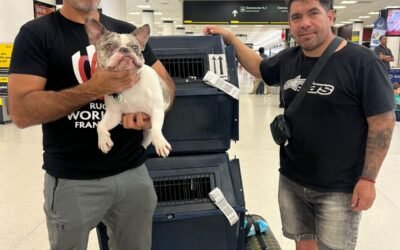
What is the accompanied pet transport service by plane like?
What is the service like for accompanied pets on airplanes?

What is the assisted travel service like when flying with your pet?
Step by step: how we help you prepare for the big trip whith your pet.

The secret behind the perfect pet carrier for your pet’s air travel.
The secret behind the perfect pet carrier for your pet's air travel.A trip without...

Behind the goals: The pet transport service chosen by soccer stars
Behind the goals: The pet transport service chosen by soccer starsIn the world of...

Vilma the Goat’s Solidarity Trip
Vilma the Goat's Solidarity TripAt Animal Bus, we know that every trip is more than...

Pet cargo transport vs. accompanied travel: key differences for pet air travel
Pet cargo transport vs. accompanied travel key differences for pet air travelWhen...
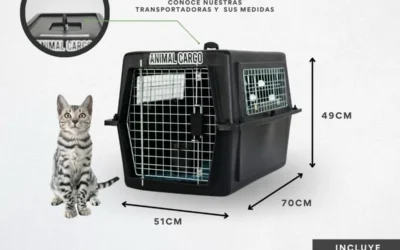
Animal Box 200 pet carrier for cats
Animal Box 200 pet carrier for catsThe safe choice for air travel Planning...
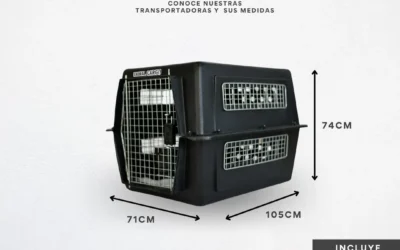
Special pet carriers for brachycephalic breeds
Special pet carriers for brachycephalic breedsAt Animal Cargo, we design and...

Preparing your pet for air travel with proper carrier acclimation
Preparing your pet for air travel with proper carrier acclimationTraveling with...

Feline pheromones: a helpful ally for a stress-free journey
Feline pheromones: a helpful ally for a stress-free journeyTraveling with cats can...

Complete Guide to Getting Your Cat Used to the Carrier Before Traveling
Complete guide to getting your cat used to the carrier before travelingPreparing a...
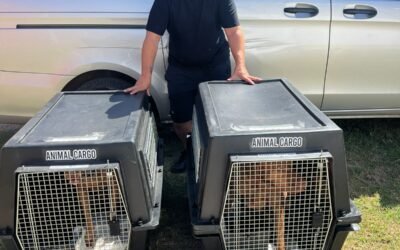
How to Choose the Ideal Carrier for Your Pet
How to Choose the Ideal Carrier for Your PetChoosing the right carrier for your pet...

Why Sedation Is Not Recommended for Pets During Air Travel
Why Sedation Is Not Recommended for Pets During Air TravelSedating pets before a...

Risks to Assess When Transporting Pets: A Complete Guide for Owners
Risks to Assess When Transporting Pets: A Complete Guide for OwnersTransporting...
From Arrival at the Airport to Takeoff: What Is the Boarding Process for an Animal on a Cargo Flight?
From Arrival at the Airport to Takeoff: What Is the Boarding Process for an Animal...
Traveling with Brachycephalic Dog Breeds: Precautions and Recommendations
Traveling with Brachycephalic Dog Breeds: Precautions and RecommendationsSafe Air...