

Air travel for large breed dogs: adaptation and tips.
Myths, truths, and advice from veterinarian Matías Moguilner: For owners of large dogs—such as Labrador, Golden Retriever, or German Shepherd—the idea of their pet traveling in the cargo hold of an airplane is often a major source of anxiety. It’s natural to wonder: How will they feel down there? Will their heart suffer? Will their joints hurt?
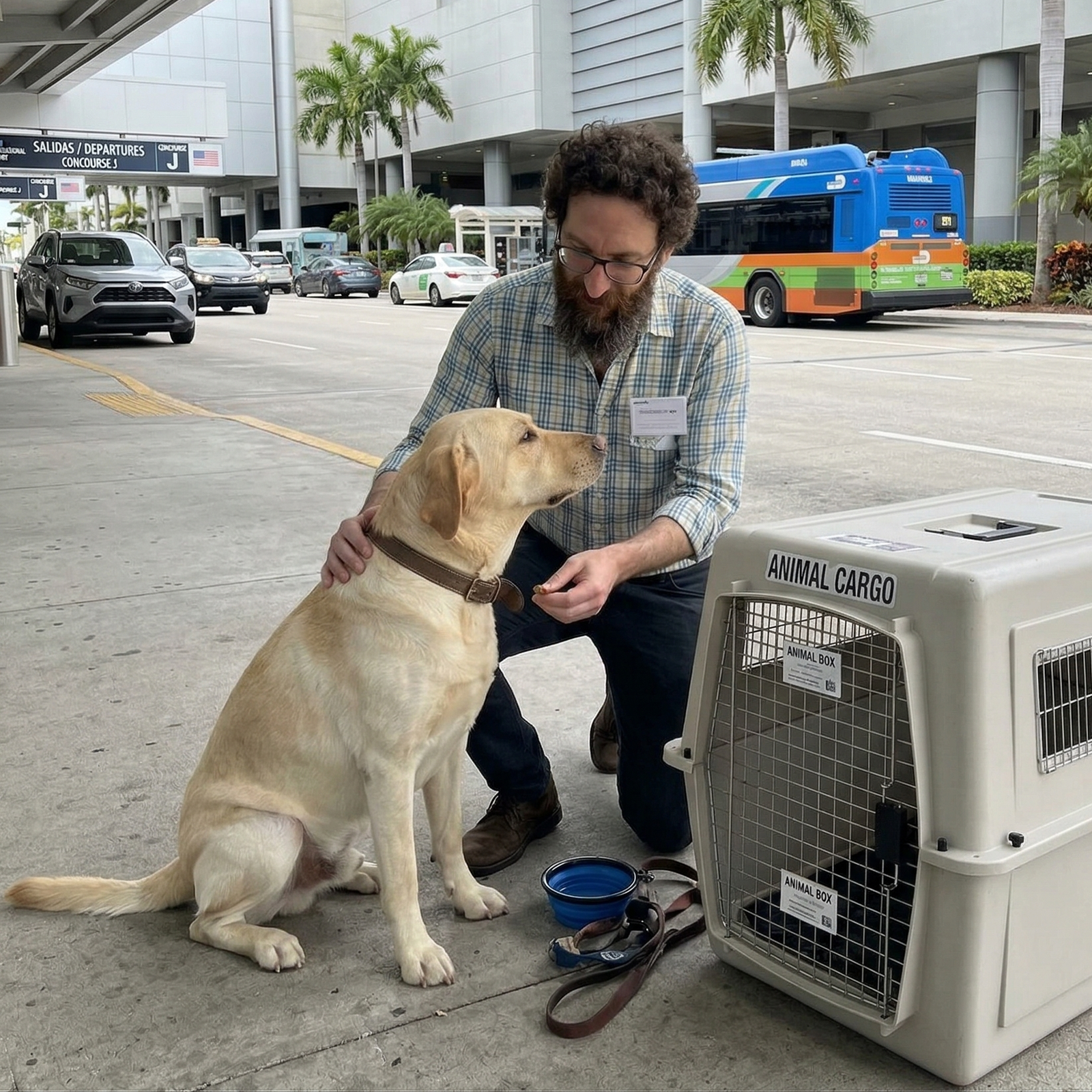
In this article, veterinarian Matías Moguilner explains the biological reality of dogs during flight and how good preparation can transform the cargo hold into a safe and calm place.
The Dog’s Awareness: The Plane Doesn’t Exist, the Crate Does
One of the first points Matías makes is crucial for reducing owners’ stress: the dog isn’t aware that it’s flying.
“For the dog, once it’s inside its crate, it doesn’t really know what’s happening outside. Whether the crate is in your living room or inside an airplane, it’s practically the same to it,” Matías explains.
The secret lies in the concept of a den. Instinctively, dogs feel safe in a shelter enclosed on the sides and top, with only one entrance. This allows them to relax, knowing that no danger will come from behind.
The “Moses Method”: How to Turn the Crate into a Refuge. The best preventative measure is early adaptation. At Animal Cargo, the animal welfare process begins long before arriving at the airport:
1. Familiarization: We deliver the crate in advance so the dog can recognize it in its home.
2. Step by step: If the animal is reluctant, it’s recommended to use only the bottom part (like a bassinet or bed).
3. Progress: Once the dog feels comfortable, put on the lid and, finally, the door.
4. Practice: Practice closing the door at night so the dog understands that it’s a safe resting space.
If the kennel feels like “its home,” the only external factor will be the noise, but stress is drastically reduced by being in familiar territory.
Joint Care and Comfort
On long-haul flights, the hard floor of the kennel can be a concern for large dogs. However, there’s a balance we must maintain with international health regulations:
• The blanket problem: Many countries require the disposal of any blanket or textile material that arrives dirty or wet for biosecurity reasons.
• The professional solution: Matías recommends using absorbent paper or similar disposable materials. They are effective in protecting joints and easy to replace or dispose of at health checkpoints without complications.
Heart Health: Why are dogs more resilient?
Faced with the fear of heart problems due to travel stress, Matías offers a very reassuring scientific fact about canine anatomy.
Unlike humans, whose cardiac blood supply depends largely on a single coronary artery, dogs’ circulatory system is much more divided. This makes the incidence of heart attacks in dogs extremely low.
“Dogs are much more resilient to heart problems than humans. It’s very rare for a dog to suffer a heart attack due to stress during travel,” says the veterinarian.
However, Animal Cargo’s protocol always includes a recommendation for a pre-trip check-up with your regular veterinarian to ensure there are no pre-existing conditions.
Does your large breed pet need to travel?
The key to a successful trip in the cargo hold isn’t luck, but preparation and professional support. Understanding your dog’s psychology and following an adaptation plan is what makes the difference between a stressful trip and a successful relocation.
Would you like us to advise you on the ideal kennel and adaptation plan for your large dog?
Contact us today and travel with the peace of mind that your pet’s well-being is in expert hands.

Tips for traveling with your dog to Europe. How to choose the right airline for entering the European Union
The ultimate guide on how to choose the right airline for entry into the European Union.
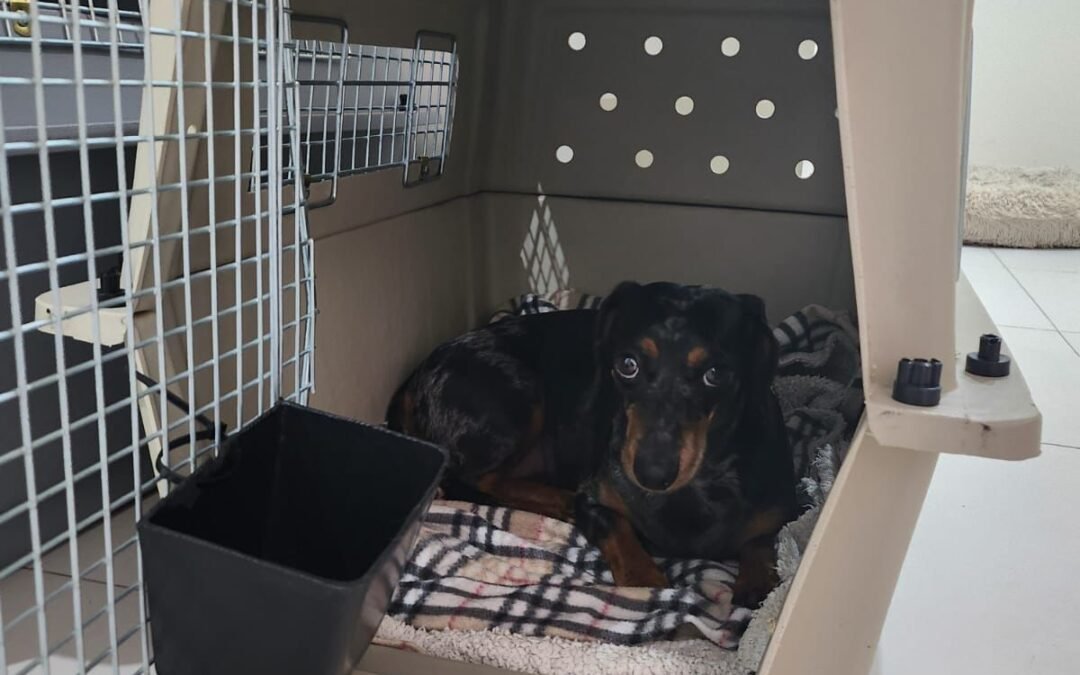
Is it safe to sedate pets for travel? Why is it contraindicated?
An animal that travels lucidly has the reflexes and muscle strength necessary to cushion the movement and maintain balance.
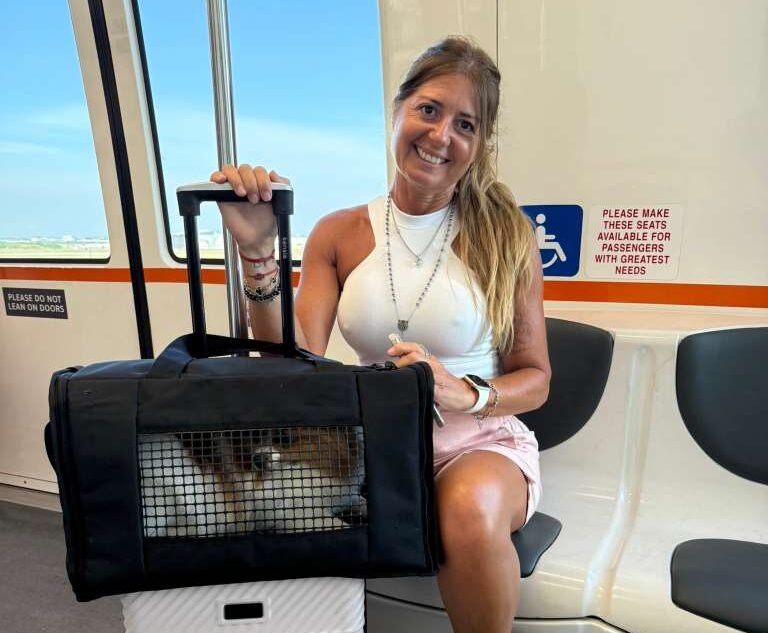
Can my dog travel in the airplane cabin or does it have to go in the cargo hold?
This is one of the most anxiety-inducing questions when planning a flight. The short answer is: it depends on the airline, the destination, and, of course, your pet's characteristics.

Milei’s dogs from the USA. How did we bring them here?
The story of the transfer of the dogs of, at that time, a media-savvy and exotic Javier Milei.

How much does it cost to transport a pet by plane?
Every pet relocation is a unique project. To give you an accurate quote, we analyze your destination, the size of your pet, and the type of travel.

Pet microchips: Identity and travel requirements.
Pet microchips: Identity and travel requirements.The pet microchip is one of the elements that generates the most questions among those planning a pet move. It\'s often confused with a GPS or a universal security system, but the reality is that its main function varies significantly depending on the region of…
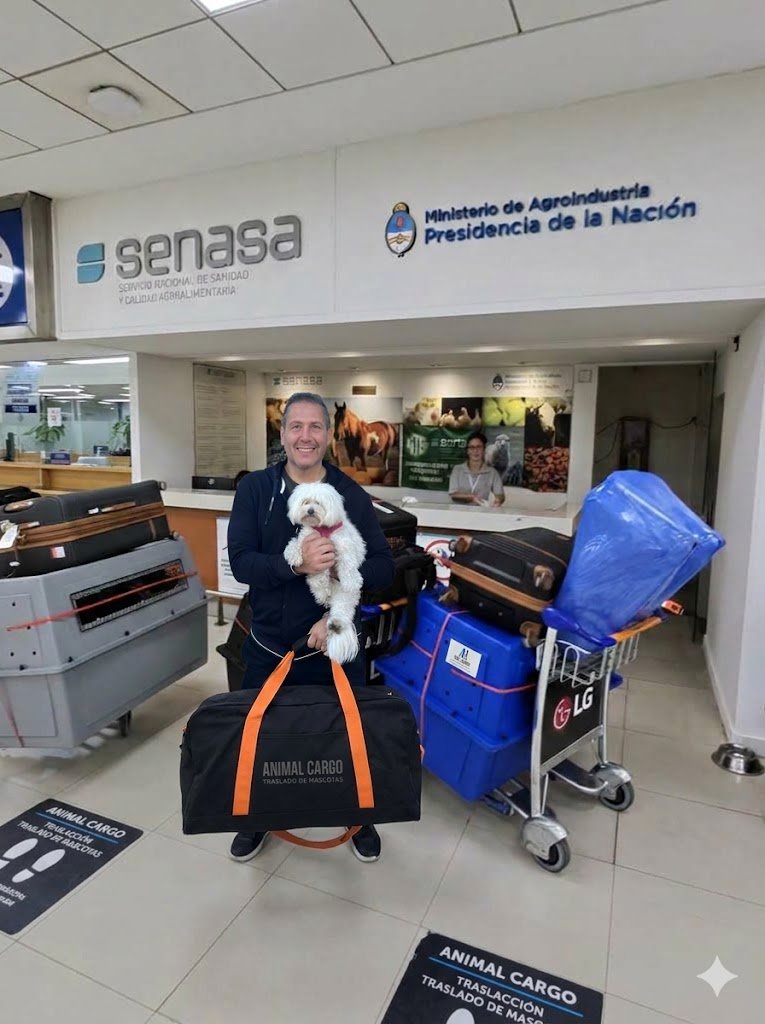
SENASA requirements guide for the international transport of pets
At Animal Cargo, we handle these procedures daily and know that technical precision is the only way to guarantee that the transfer will be carried out without any problems.

If your pet is traveling in the cabin: choose the perfect bag with Animal Box
The secret behind the perfect pet carrier for your pet\'s air travel.If you are planning a trip and your pet weighs less than 10 kilograms, it is likely that they can fly with you in the cabin of the plane. However, for this trip to be successful, it is essential…

What is the assisted travel service like when flying with your pet?
Step by step: how we help you prepare for the big trip whith your pet.

Behind the goals: The pet transport service chosen by soccer stars
Behind the goals: The pet transport service chosen by soccer starsIn the world of soccer, transfers and constant travel are a reality. But what happens to the furriest members of the family? For more than 20 years, Animal Cargo has specialized in a unique niche market: transporting the pets of…