

How to Choose the Ideal Carrier for Your Pet
Choosing the right carrier for your pet is essential to ensure their comfort and safety during travel. Whether it’s for a trip to the vet, a vacation, or a longer journey, the carrier is an indispensable tool. In this article, we guide you step by step to make the best decision, taking into account the specific needs of your furry friend.
Why is it important to choose the right carrier?
The carrier is not just a means of transportation; it’s also a safe refuge for your pet. Choosing the right one offers many benefits:
Safety
A suitable carrier protects your pet during travel.
Comfort
It ensures your pet has enough space to move and rest.
Stress reduction
A good carrier can make trips less intimidating for your pet.
Compliance with regulations
In many cases, especially during air travel, it’s mandatory to use a carrier that meets specific requirements.
Key Factors for Choosing the Ideal Carrier
Proper Size
Size is one of the most important aspects. Follow these guidelines to determine it:
Enough space
Your pet should be able to stand up, turn around comfortably, and lie down without restrictions.
Accurate measurements
Measure your pet from the snout to the base of the tail and from the floor to the top of the head. Make sure the carrier is at least 5 cm larger in both dimensions.
Materials and Durability
There are different materials for carriers. The choice will depend on the type of trip and your pet’s needs:
Hard plastic
Ideal for long trips or air travel. They are durable, easy to clean, and offer greater security.
Fabric or soft materials
Perfect for short trips. They are lightweight but less durable.
Metal or wire
Suitable for large dogs or pets that need more ventilation.
Ventilation
A good carrier should have sufficient ventilation to ensure your pet can breathe comfortably:
Ventilation openings
Make sure the walls have grilles or perforations.
Airflow
Check that airflow is adequate in all directions.
Ease of Transport
Also consider your comfort:
Handles and straps
Look for carriers with ergonomic handles or adjustable straps for easy carrying.
Weight
Choose a carrier that is lightweight yet sturdy.
Portability
Some models are foldable, making them easier to store.
Compliance with Regulations
If you’re traveling by air, ensure the carrier complies with airline regulations and IATA standards. Verify:
Dimensions
The allowed dimensions.
Security features
The closure and security systems.
Materials
The required materials.
Type of Pet
The type and size of your pet also influence the choice:
Dogs
Consider sturdy models, especially for large breeds.
Cats
Prefer enclosed carriers that provide a sense of security.
Small mammals or birds
Look for species-specific options with a design that ensures their safety.
Tips for Introducing Your Pet to the Carrier
Gradual familiarization
Leave the carrier in an accessible area so your pet can explore it.
Positive associations
Place toys, treats, or a blanket inside.
Practice simulations
Take short trips to help your pet get used to the movement.
Common Mistakes When Choosing a Carrier
Wrong size
Choosing a carrier that’s too small can make your pet uncomfortable and increase their stress.
Poor quality materials
A low-quality carrier may break or be unsafe.
Ignoring regulations
This could cause issues when traveling by plane or public transport.
Final Recommendations
Choosing the ideal carrier for your pet is an investment in their well-being and safety. Take the time to research and compare options before making a decision. Remember that every pet is unique, so what works for one may not be suitable for another.
If you need more advice or have questions, consult animal transport experts. At Animal C

Recent Notes

Tips for traveling with your dog to Europe. How to choose the right airline for entering the European Union
The ultimate guide on how to choose the right airline for entry into the European Union.

Is it safe to sedate pets for travel? Why is it contraindicated?
An animal that travels lucidly has the reflexes and muscle strength necessary to cushion the movement and maintain balance.

Air travel for large breed dogs: adaptation and tips.
For owners of large dogs—such as Labrador, Golden Retriever, or German Shepherd—the idea of their pet traveling in the cargo hold of an airplane is often one of the biggest sources of anxiety.

Meet Veterinarian Matías Moguilner, the backer of Animal Cargo
Are you concerned about your pet’s well-being for your upcoming trip? We know that your best friend’s safety is your top priority. That’s why, at Animal Cargo, professional support isn’t just a detail; it’s the foundation of everything we do.

Can my dog travel in the airplane cabin or does it have to go in the cargo hold?
This is one of the most anxiety-inducing questions when planning a flight. The short answer is: it depends on the airline, the destination, and, of course, your pet’s characteristics.

Milei’s dogs from the USA. How did we bring them here?
The story of the transfer of the dogs of, at that time, a media-savvy and exotic Javier Milei.

How much does it cost to transport a pet by plane?
Every pet relocation is a unique project. To give you an accurate quote, we analyze your destination, the size of your pet, and the type of travel.

SENASA requirements guide for the international transport of pets
At Animal Cargo, we handle these procedures daily and know that technical precision is the only way to guarantee that the transfer will be carried out without any problems.

If your pet is traveling in the cabin: choose the perfect bag with Animal Box
The secret behind the perfect pet carrier for your pet's air travel.If you are...
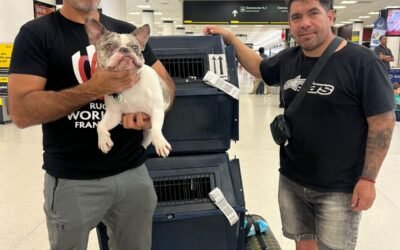
What is the accompanied pet transport service by plane like?
What is the service like for accompanied pets on airplanes?

What is the assisted travel service like when flying with your pet?
Step by step: how we help you prepare for the big trip whith your pet.

The secret behind the perfect pet carrier for your pet’s air travel.
The secret behind the perfect pet carrier for your pet's air travel.A trip without...

Behind the goals: The pet transport service chosen by soccer stars
Behind the goals: The pet transport service chosen by soccer starsIn the world of...

Vilma the Goat’s Solidarity Trip
Vilma the Goat's Solidarity TripAt Animal Bus, we know that every trip is more than...

Pet cargo transport vs. accompanied travel: key differences for pet air travel
Pet cargo transport vs. accompanied travel key differences for pet air travelWhen...
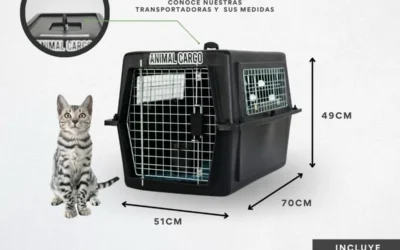
Animal Box 200 pet carrier for cats
Animal Box 200 pet carrier for catsThe safe choice for air travel Planning...
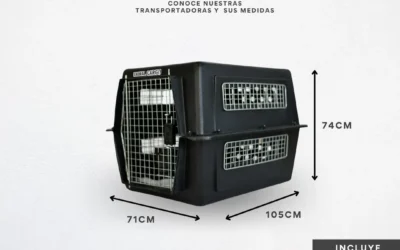
Special pet carriers for brachycephalic breeds
Special pet carriers for brachycephalic breedsAt Animal Cargo, we design and...

Preparing your pet for air travel with proper carrier acclimation
Preparing your pet for air travel with proper carrier acclimationTraveling with...

Feline pheromones: a helpful ally for a stress-free journey
Feline pheromones: a helpful ally for a stress-free journeyTraveling with cats can...

Complete Guide to Getting Your Cat Used to the Carrier Before Traveling
Complete guide to getting your cat used to the carrier before travelingPreparing a...

Why Sedation Is Not Recommended for Pets During Air Travel
Why Sedation Is Not Recommended for Pets During Air TravelSedating pets before a...

Risks to Assess When Transporting Pets: A Complete Guide for Owners
Risks to Assess When Transporting Pets: A Complete Guide for OwnersTransporting...
From Arrival at the Airport to Takeoff: What Is the Boarding Process for an Animal on a Cargo Flight?
From Arrival at the Airport to Takeoff: What Is the Boarding Process for an Animal...
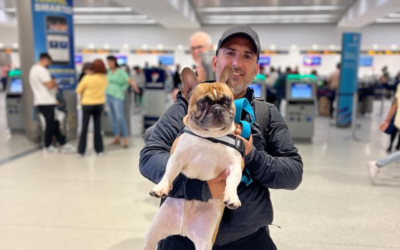
Traveling with Brachycephalic Dog Breeds: Precautions and Recommendations
Traveling with Brachycephalic Dog Breeds: Precautions and RecommendationsSafe Air...

Pet passport: what is it, in which countries is it used, and how to obtain it?
Pet passport: what is it, in which countries is it used, and how to obtain it?Pet...